Selling dashcam footage for AI training, on your own terms
Self-driving teams need the rare clips sitting on ordinary dashcams. How to license yours with a consent receipt on Stellar, what to blur first, and what happens when you withdraw.
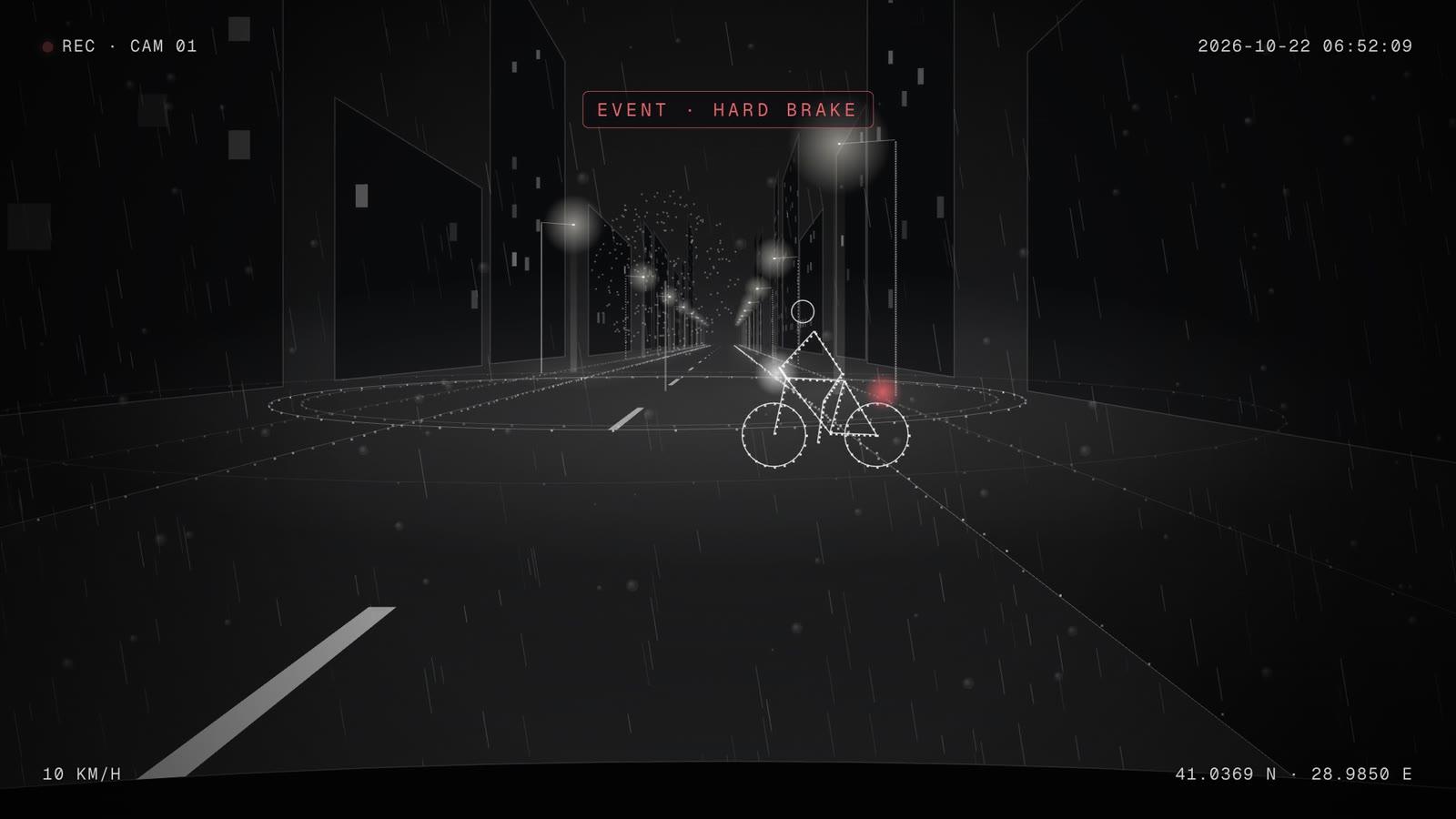
Most dashcams record in a loop and write over the oldest footage when the card fills up. The clips nobody saves are often the ones a self-driving team would most like to have: a cyclist cutting across a wet roundabout at ten to seven in the morning, filmed from where a driver sits.
We made a short film about one clip like that. This post follows the same story with the real product underneath it. It covers who wants dashcam footage and why, what you have to sort out before sharing any, how a licence works on Datavar, and what happens when you change your mind.
Mara, her roundabout and the numbers on screen in the film are illustrative. The flow is the product as it runs today on Stellar testnet, where buyers are simulated and payouts settle in test currency.
The short answer
You can license dashcam footage for AI training if the footage is yours and you have dealt with the other people in it. On Datavar you upload a clip, your browser hashes it, and you sign a consent receipt naming who may use it, for what purpose and until when. The receipt lives on the Stellar ledger. When a team licenses the clip, the price is credited to you in a payout contract that only your wallet can claim from. You can withdraw consent whenever you like, and from that moment the file stops being served.
Why self-driving teams want ordinary dashcam clips
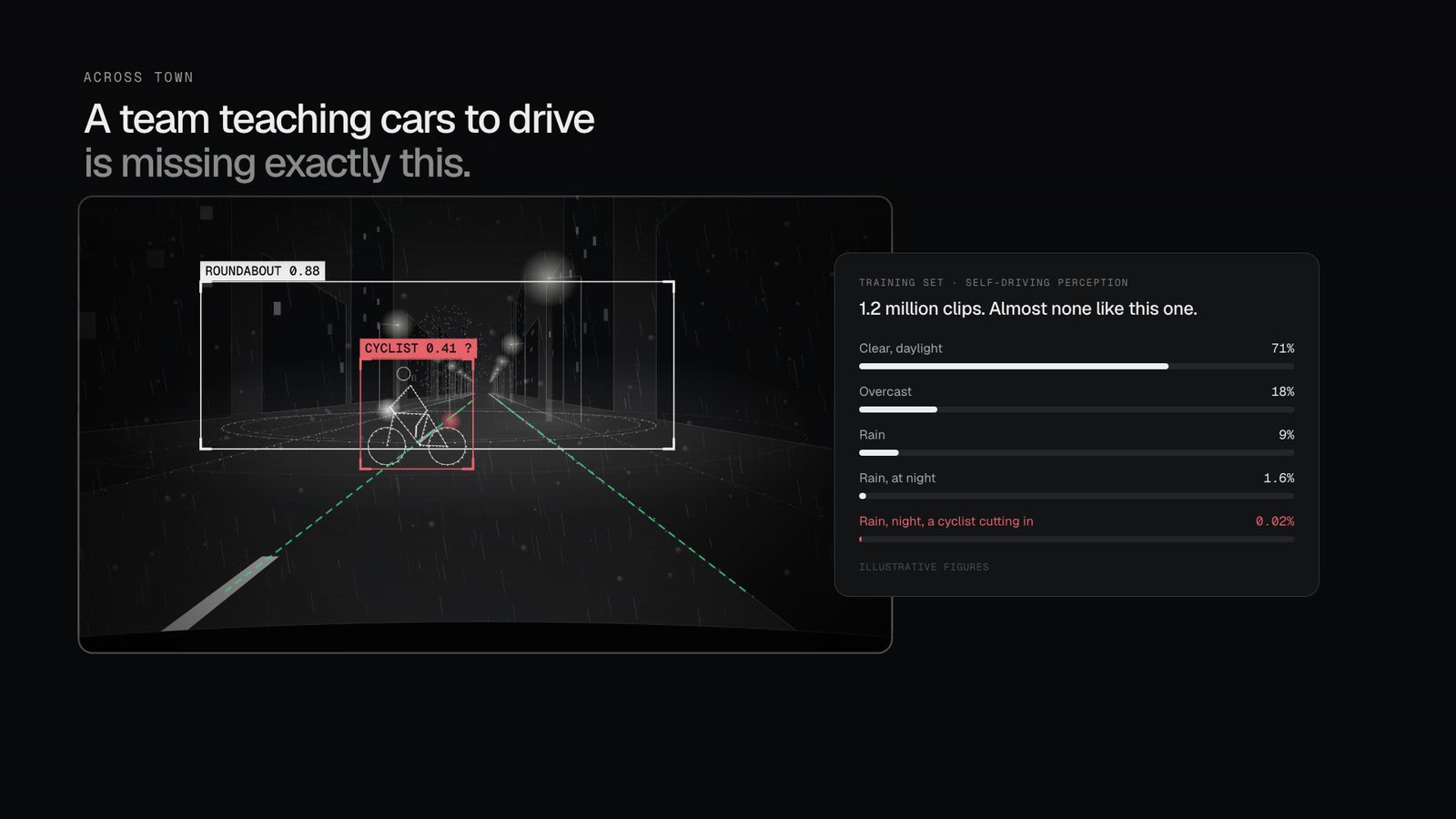
A perception model learns from what it has seen. Clear daytime driving is easy to collect in bulk, because test fleets spend most of their hours in it. Rain at night, low sun on a wet road, a roundabout with odd markings and a cyclist who doesn't signal all turn up rarely. Engineers call these edge cases, or the long tail, and a fleet can drive for months to gather a handful.
A commuter with a dashcam collects them without trying. Drive the same road every morning for a year and you have filmed one junction in every kind of weather your city gets. Researchers already build datasets this way. BDD100K, one of the best known driving datasets, is 100,000 videos of about 40 seconds each, and Berkeley DeepDrive collected them through Nexar's crowd-sourced dashcam app.
What usually happens to dashcam footage
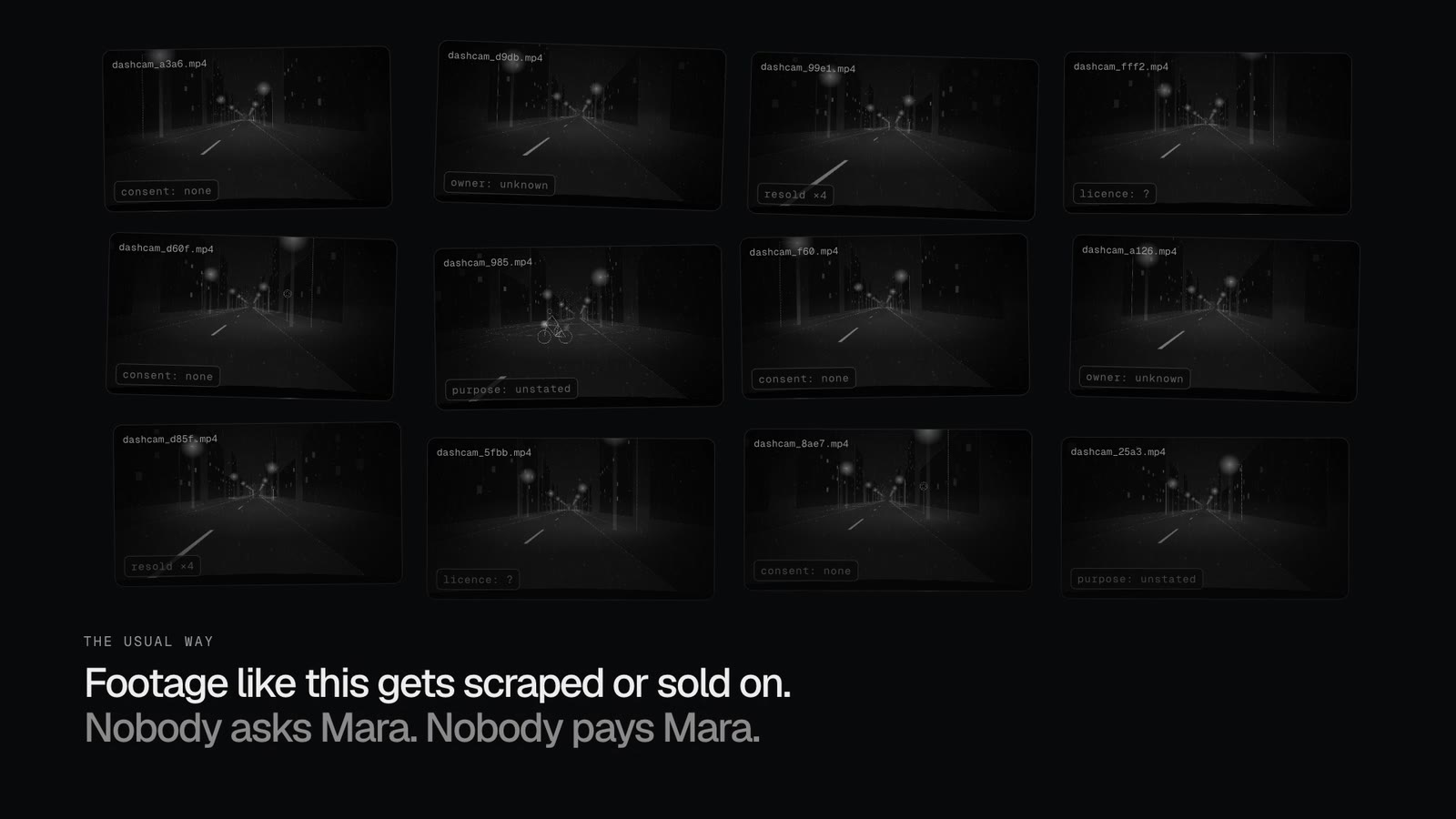
Footage that leaves a dashcam tends to lose its terms on the way. Clips end up in road-rage compilations, on forums and in insurance claims, or in apps whose terms let the operator license them onward. After a few copies, nobody downstream can say who filmed a clip or what they agreed to. The driver was never asked and is never paid.
That gap hurts buyers too. When a regulator or a court asks a model builder where its training data came from, "a broker told us it was fine" is a weak answer, because a broker's warranty is a document nobody can check.
Is it legal to sell dashcam footage?
Your footage belongs to you. The people in it don't. A readable number plate or a recognisable face can be personal data: the GDPR covers it in the EU, Turkey's KVKK works along similar lines, and the European Data Protection Board has published guidelines (3/2019) on video devices in particular. Filming a public road from your own car is lawful in most places, but licensing that film to a company for training is a separate use, and the rules for it differ from country to country.
Datavar does not open, scan or blur your files. We chose that so your footage stays private from us, and it means the cleaning is your job. Before you upload a clip:
- Blur faces and number plates that can be read, or pick clips where none are visible.
- Strip the audio track, since a dashcam microphone records whatever is said inside the car.
- If you drive for work, make sure nothing in the frame is confidential to your employer.
If you aren't sure your country allows a particular use, ask someone qualified before you grant consent. Our terms ask you to confirm, each time, that you hold the rights to what you contribute.
How licensing a clip works on Datavar
- Connect a Stellar wallet. The wallet is your account, so there is no email and no password.
- Upload the clip under Dashcam & camera. Files can be up to 50 MB, so trim to the moment that matters. Your browser computes the file's SHA-256 hash before anything is sent, and the file goes to private storage under your wallet's own path.
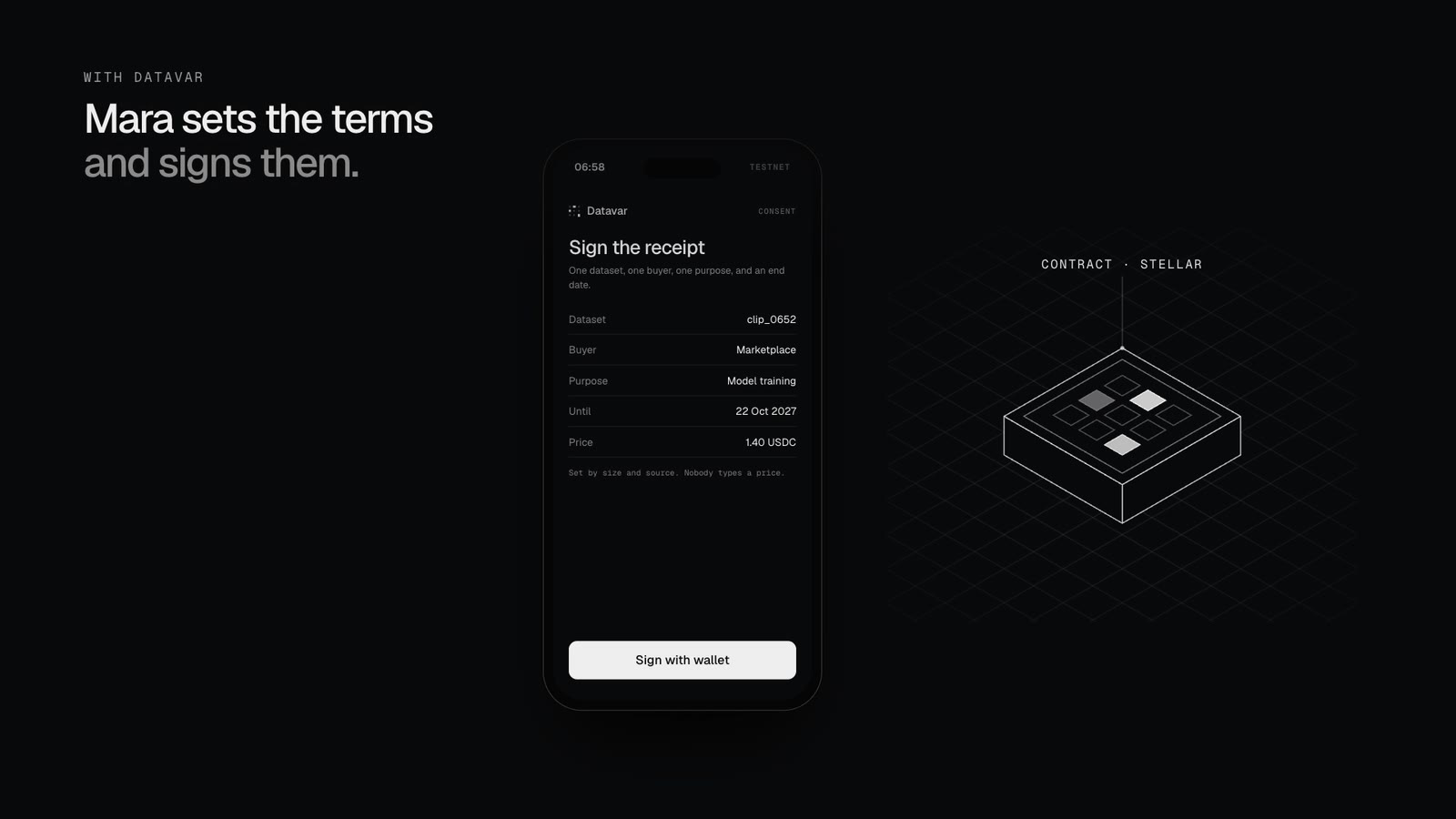
- Grant consent. You choose the buyer, the purpose and the end date, and your wallet signs. To list a clip on the marketplace, you grant consent to the marketplace's address. The contract refuses any grant without a future end date, so a permanent licence can't exist here.
- Get paid when the clip sells.
The receipt commits to the hash. A buyer can confirm that the file they received is exactly the one you agreed to share, and they can check the receipt against the contract without an account with us.
What a buyer sees
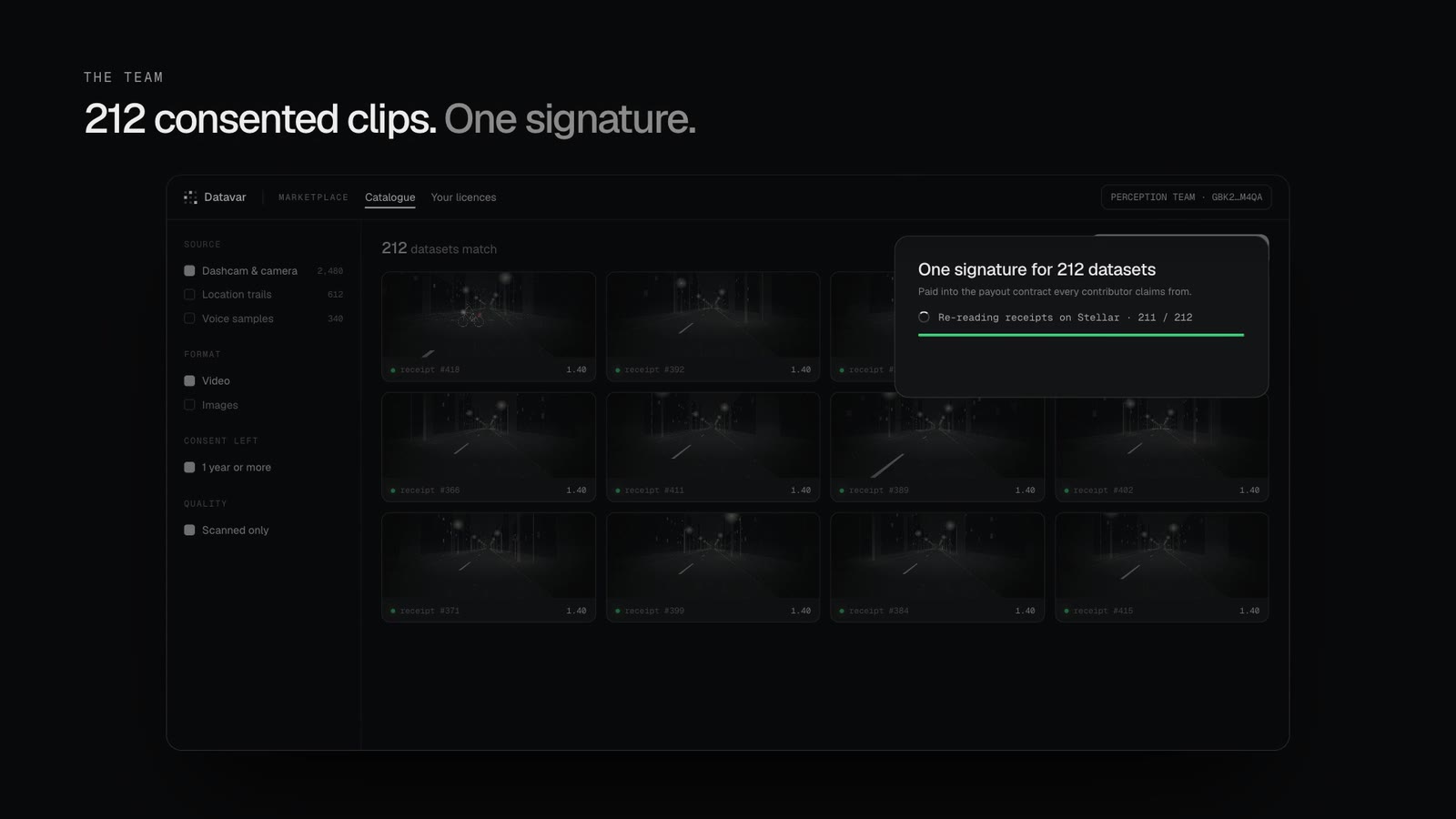
A perception team browsing the catalogue sees each file's category, format, size, upload date, the consent behind it and its price. Your title, your description and your wallet address stay hidden. Prices are computed from the source type and the file size, so nobody haggles over a single clip.
The team can put two hundred clips in a basket and pay for all of them with one signature, in XLM or USDC. Before a licence is written, the server reads every consent receipt in the basket again from the chain, so a licence is never issued against consent that was withdrawn a minute earlier.
How you get paid
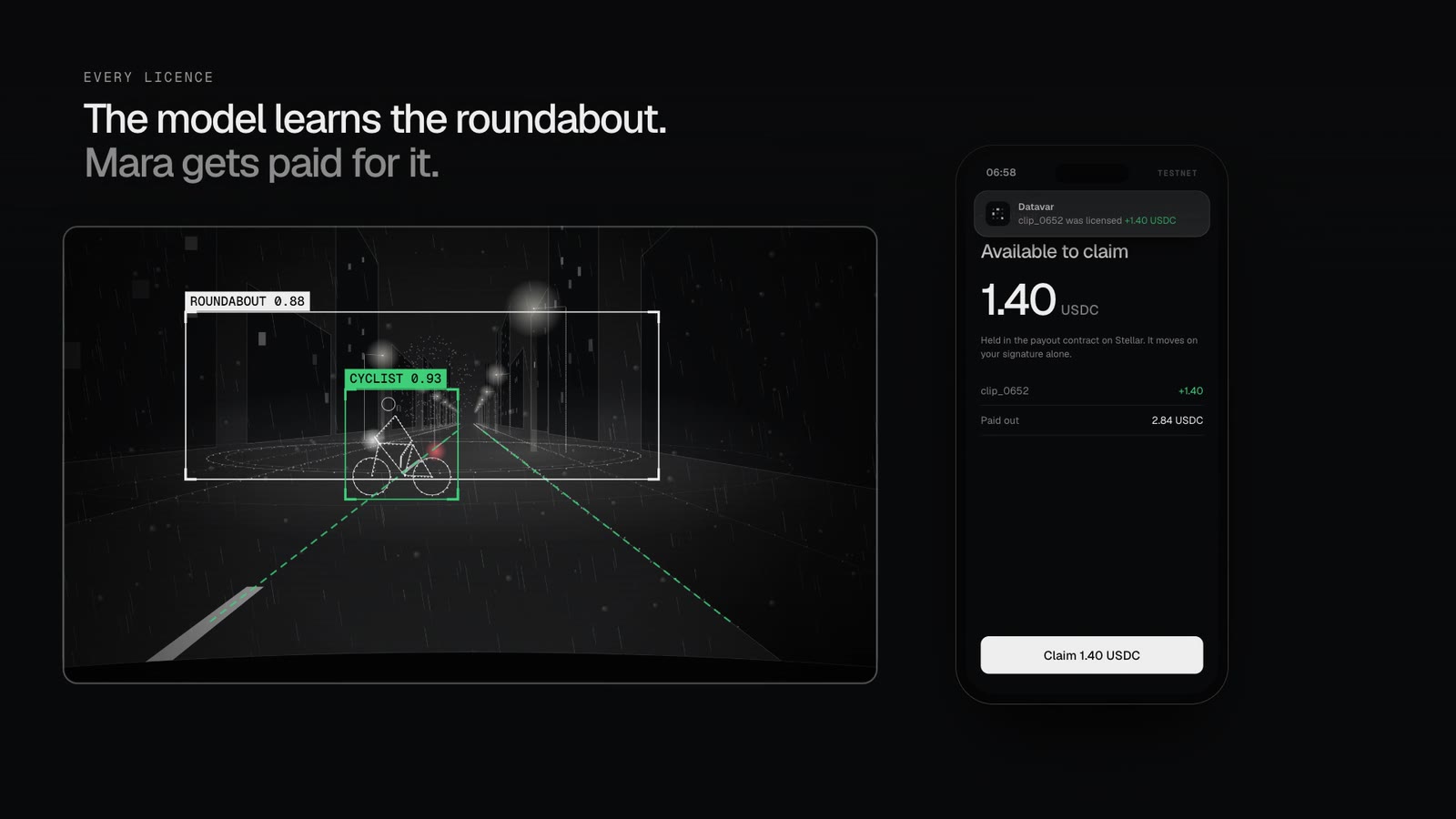
When a clip is licensed, the price is credited to your address inside a payout contract on Stellar. Datavar takes no fee today. You claim by signing with your own wallet, the contract pays the address that signed, and you get a transaction hash that resolves on a public explorer even if our site is down. We can record whose money it is, but we can't pay it to ourselves, redirect it or stop you claiming it.
A Stellar transaction costs a fraction of a cent, so a payout of a dollar or two is still worth sending. The 1.40 in the film is an illustration, not a quote. Rarer footage earns more than common footage, and nothing guarantees a sale.
Changing your mind
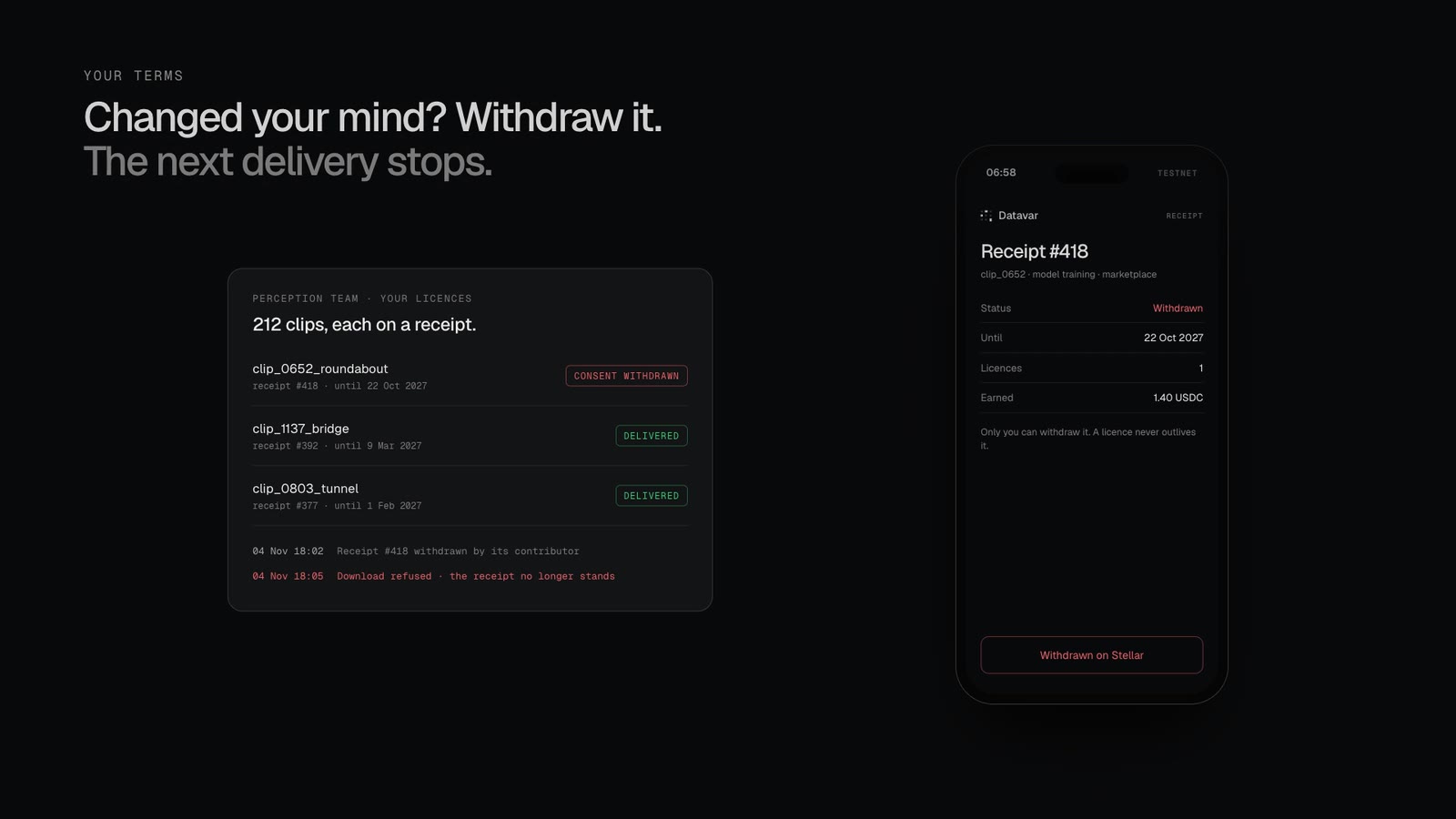
Only the person who granted a receipt can withdraw it. The buyer can't, and neither can Datavar, because the contract checks the signature. Once you withdraw, the ledger shows the receipt as revoked and storage stops serving that buyer the file.
Withdrawal has limits, and they're worth knowing before you grant anything. A model that has already trained on your clip keeps what it learned, and a copy the buyer has already downloaded can't be pulled back. Revoking stops future use and makes the end of the permission public. That's why every grant on Datavar carries an end date.
Questions people ask
Can I sell my dashcam footage?
Yes, if you own it and have dealt with the people who appear in it. Strictly, you license it. You keep ownership, and the buyer gets permission for one stated purpose until a fixed date.
Who buys dashcam footage?
Mostly teams training driving and perception models, and researchers working on road safety. They want the conditions their own fleets rarely record, such as rain, night, glare, unusual junctions and near misses.
How much is dashcam footage worth?
There is no fixed rate. The price depends on the source type and the file size, and rare conditions are worth more. Datavar runs on testnet with simulated buyers for now, so there are no real market prices to quote yet.
Do I need to blur faces and number plates?
In most cases, yes. Under the GDPR and similar laws a readable plate or a recognisable face can be personal data, and Datavar does not redact files for you.
What happens if I withdraw consent?
The receipt is marked revoked on Stellar and the file is no longer delivered to the buyer. A model that already trained on it keeps what it learned.
Where is my footage stored?
In private storage under your wallet's path. A buyer you named can download it only while your receipt is valid.
If you have a clip like Mara's, you can contribute it from your dashboard, or read how consent receipts work first.