Data got expensive. The people who make it still get nothing.
Where Datavar came from, what a row of data has been worth across three eras, and why we are asking the Stellar Community Fund to pay for the half of the protocol that does not exist yet.
Datavar started because somebody asked for it.
The people building it came from io.net and Hacken. One of those rents out GPUs to teams training models, which teaches you where the bottleneck in AI actually sits. Compute is a commodity: you can rent an H100 by the hour from a dozen suppliers and the price drops every quarter. Data never followed. There is no spot market for a hundred thousand hours of consented speech, and no way to buy it that a lawyer signs off on quickly.
The other audits smart contracts, which teaches a narrower lesson. A claim and a checked claim are different objects. Audits exist because "trust us" stopped working as a security model, and the industry that learned it first is the one that lost money learning it.
Someone who knew both of those backgrounds asked whether we could build a data protocol. Not a marketplace with a data category in it. A protocol: the terms of what was agreed living somewhere that neither the buyer nor the seller can quietly edit afterwards. We said yes. Most of the time since has gone on finding out which parts of that we had underestimated.
What data used to be worth
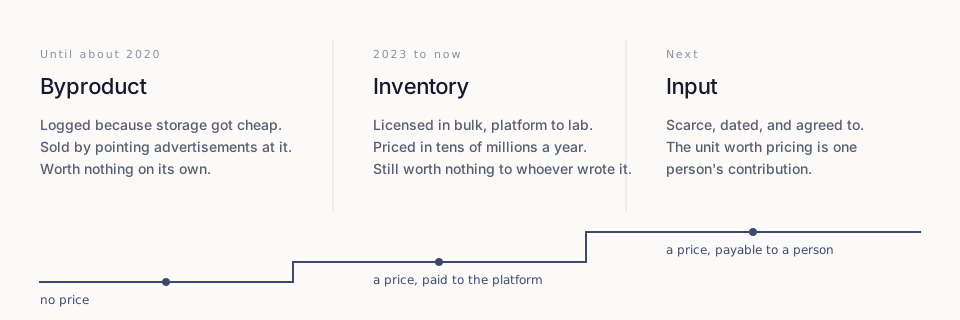
For most of the internet's life your data was exhaust. Produced on the way to producing something else, kept because storage got cheap, monetised by pointing advertisements at it. "Data is the new oil" was coined by Clive Humby in 2006, and the half of the line nobody repeats is the useful half: oil is worthless until somebody refines it.
Then something refined it. A model trained on a trillion tokens turns text into a product, and the pile acquired a price.
What data is worth now
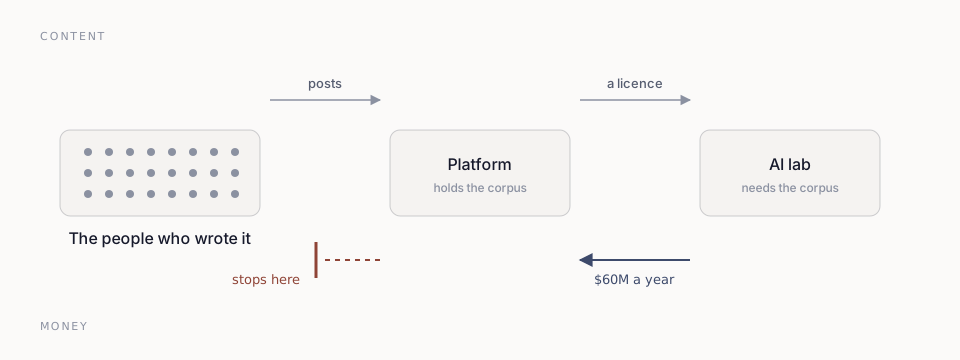
In 2024 Reddit licensed its content to Google for a reported $60 million a year, then signed with OpenAI on comparable terms. News Corp's agreement with OpenAI was reported at more than $250 million across five years. Shutterstock booked over $100 million of AI licensing revenue in 2023. Real prices, real market, real lawyers on both sides of the table.
Look at who is at that table. The platform and the lab. The people who wrote the posts are the inventory, and they are not a party to the sale.
Calling that theft is easy and slightly wrong, and it is worth being precise about why it happens, because the reason is fixable and the outrage isn't. Nothing anywhere records who agreed to what. Without that record the smallest sellable unit is the whole platform, and the only party who can sell it is the platform. An individual contribution is not being withheld from the deal. It cannot be expressed in one.
What data is about to be worth
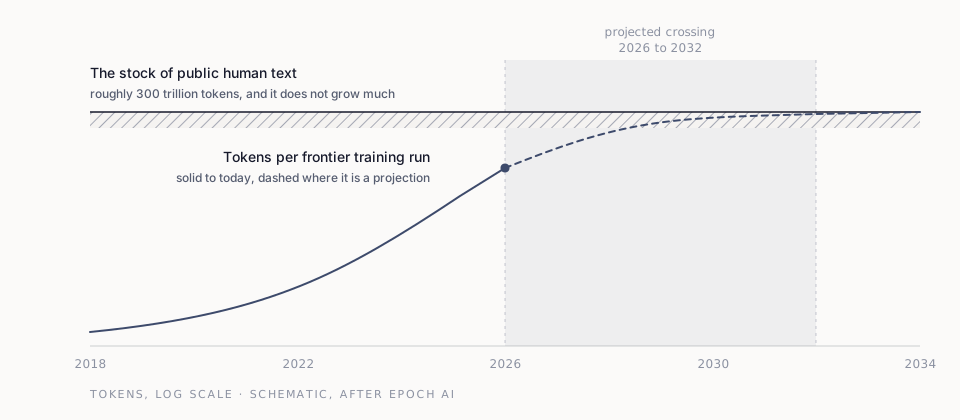
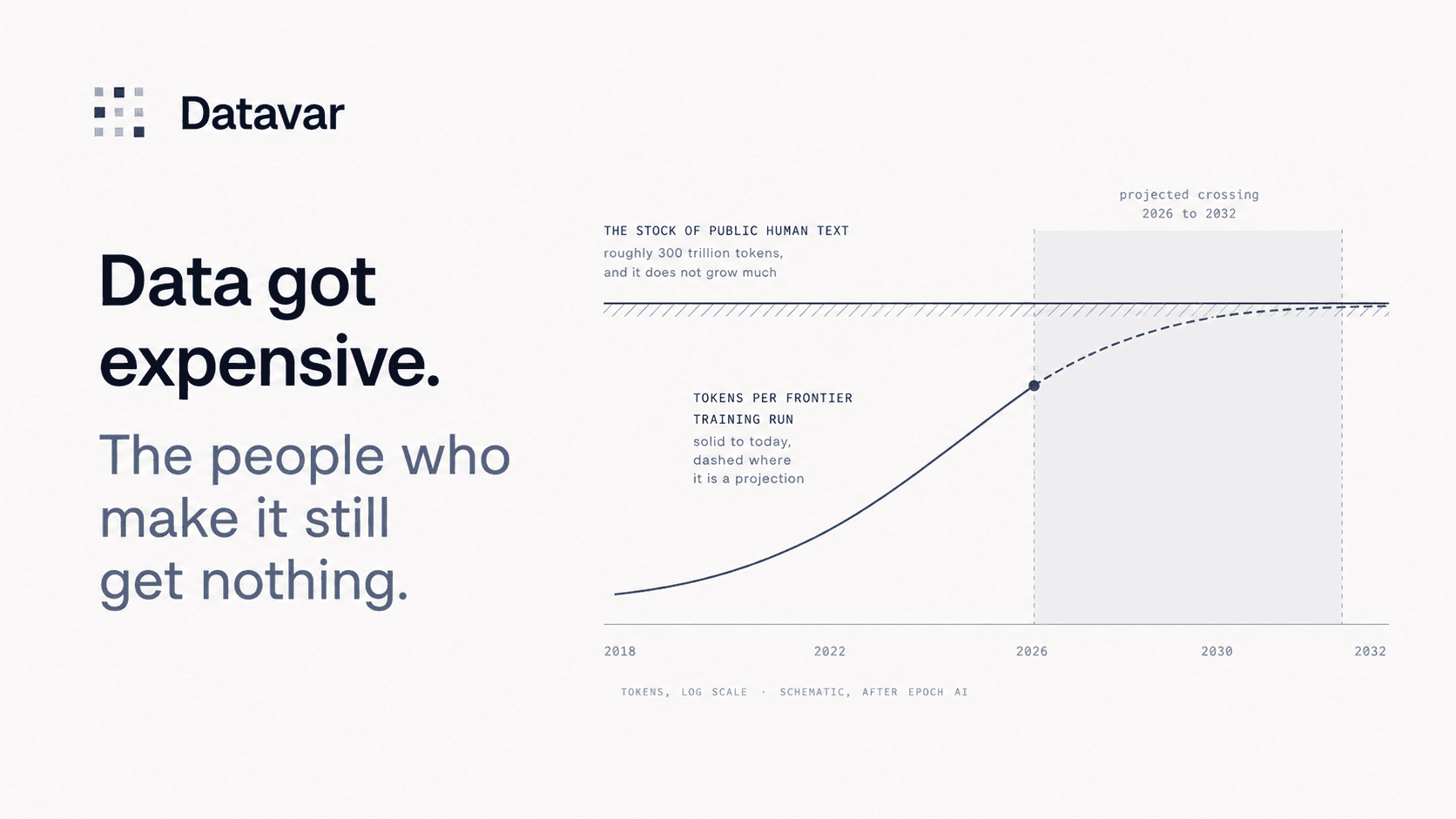
Epoch AI put a number on the ceiling. They estimate the effective stock of public human text at around 300 trillion tokens, and project that training runs reach datasets of that size somewhere between 2026 and 2032, with a median near 2028.
You can argue with the estimate. The direction is harder to argue with: compute gets cheaper and more plentiful every year, and human beings write at roughly the rate they always have.
When the free pile thins out, a lab has three moves. Train on synthetic data, which is a model learning from its own output and has a literature on how that goes wrong. Reach for data currently treated as private, which is where the email and the messages are. Or pay people for data that does not exist yet.
Only the third one improves with time, and it is the only one nobody has built the plumbing for. Paying people at scale means answering a question nothing currently answers: who agreed to what, for which buyer, for what purpose, until when, in a form the buyer can check without trusting the seller.
That is what we are building.
What Datavar is
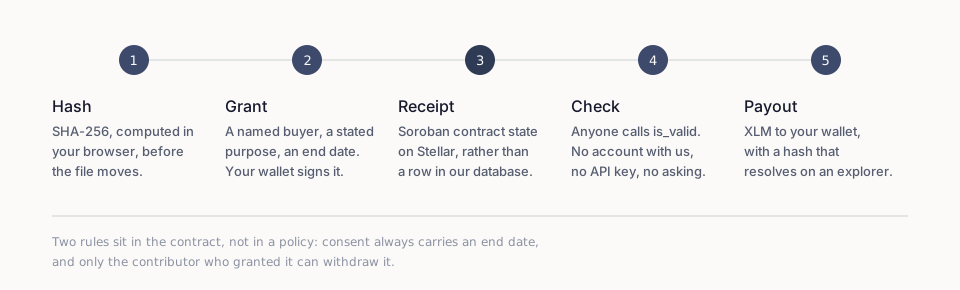
You connect a Stellar wallet and sign once to prove it is yours. No email and no password exist in the product, because neither was ever collected. You upload a dataset and your browser computes its SHA-256 before the file moves. You grant consent to a named buyer for a stated purpose until a stated date, and your wallet signs it. The grant becomes a receipt in Soroban contract state on Stellar instead of a row in our database.
That last distinction carries the whole argument. A buyer deciding whether they may use a record calls is_valid on the contract and gets the same answer our own dashboard gets, from the same place, without an account with us and without taking our word that nothing has been edited since. Two rules live in the contract rather than in a policy document: consent always carries an end date, and only the contributor who granted it can withdraw it. We tried breaking the second one on testnet with our own admin key. The transaction failed and the receipt stayed standing.
The contract is live on Stellar testnet at CBBSNMX74QCDBYJ3MECQTVBAQQ52NYJWLI5B7JUEESHHSPAGAJAJTLQI, with the source in the repository. Payouts are real Stellar payments that resolve on an explorer. The full walkthrough is in the docs.
The buyers are not real. Sales today are a simulation we run ourselves, at prices we invented, settling in testnet XLM. There is no catalogue, no licence and no data delivery. About half the protocol exists, and the missing half is the half that pays anyone.
Why we are asking the Stellar Community Fund
Building that other half is a few months of full-time work for three people, which is what the Stellar Community Fund exists to pay for. It is the Stellar Development Foundation's grant programme. Build Awards go up to $150,000 in XLM, paid in four instalments against delivered work, and the final instalment has to be a mainnet launch.
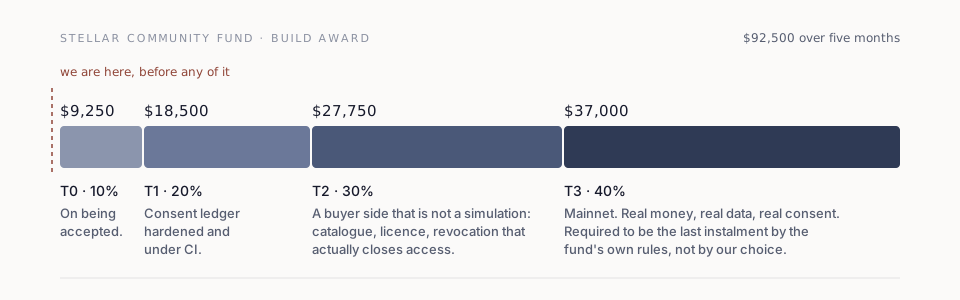
We are asking for $92,500 over five months, a little over sixty per cent of the ceiling. The figure is built from what three people cost for five months rather than from what the programme allows, which matters because the handbook says that proposals overreaching on cost relative to scope tend to perform badly. Nothing else is in it.
One rule shaped everything above it: the fund does not pay for past work. The consent contract, the wallet-signed sign-in, the row-level security, the week spent deleting invented numbers off our own front page, none of that can be billed to anyone. So we built the smallest version of each that we could defend rather than the largest version we could imagine.
Stellar is not decoration here, and we would rather be tested on that than believed on it. A consent receipt has to be cheap to write and cheap for a stranger to read, and it has to settle fast enough that a buyer can check one inside a request. A two dollar payout has to still be worth making after fees. Those properties are why the contract is in Soroban instead of a Postgres table we own. A table we own settles nothing, because the argument is precisely about what happens when someone stops trusting us.
We have not submitted yet. The plan is late September, and we will report here either way. A reviewer will also notice, before anything else, that we have no users, no revenue and no standing in this ecosystem, and that the track we are applying to ends in a community vote among people who have never heard of us. Those are real problems and no amount of code fixes them.
What has to be true a year from now
- The simulated buyers are gone from the repository and a real buyer has licensed a real dataset.
- The contracts are on mainnet and a contributor has been paid in XLM or USDC they can spend.
- Somebody outside this company has verified a receipt without asking us how, working from published documentation.
- One person has been paid for data because they agreed to it, and can name the buyer, the purpose, and the date the permission runs out.
The last item is the product. The rest is machinery for making it possible.
Until then this is a testnet protocol with half a market attached. We would rather write that here than have you find it.